Source Corrosion-Resistant Pneumatic Diaphragm Pump for Chemical, Oil, and Mining
Find and compare 30 corrosion-resistant pneumatic diaphragm pump models from verified suppliers. Evaluate options featuring plastic or stainless steel construction, varying flow rates up to 358L/min, and certifications like CE and ISO9001 for industrial utility applications.
Key considerations
Products List


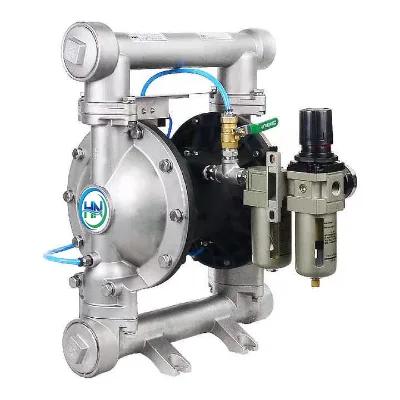


Heavy Duty Air Operated Diaphragm Pumps Corrosionresistance Acidalkaliresistance
$1000.00 - $1500.00
MOQ: 1 Pieces


Durable Stainless Steel Pneumatic Diaphragm Pump with Enhanced Performance
$200.00 - $1300.00
MOQ: 1 Pieces

Comprehensive Sourcing Guide
Corrosion-Resistant Pneumatic Diaphragm Pump Sourcing Guide
Selecting the right corrosion-resistant pneumatic diaphragm pump requires a careful balance of material compatibility, operational theory, and supply chain reliability. These pumps are widely utilized in industrial utilities, pharmaceutical manufacturing, chemical processing, oil extraction, and mining operations due to their ability to handle aggressive fluids without the risk of sparks or electrical failure. The core advantage lies in their air-operated design, which eliminates the need for external power sources at the pump head, making them ideal for hazardous environments where explosion-proof performance is critical. Buyers must prioritize pumps that offer customizable support, including OEM, ODM, and OBM services, to ensure the equipment integrates seamlessly into existing infrastructure.
The market offers a diverse range of configurations, from plastic-bodied units suitable for acidic applications to stainless steel variants designed for higher durability and hygiene standards. Key performance indicators such as maximum head, suction lift, and flow rate vary significantly across models, requiring precise matching to specific process demands. For instance, some models support a maximum head of up to 84 meters with flow rates reaching 358 liters per minute, while others are optimized for lower flow applications with compact footprints. Understanding these technical distinctions is essential for procurement teams aiming to minimize downtime and maximize efficiency in continuous operation scenarios.
Product Scope and Observed Listing Signals
The current market landscape for corrosion-resistant pneumatic diaphragm pumps reveals a wide spectrum of product attributes, primarily driven by material selection and structural design. Listings frequently highlight the use of plastic or metal materials, with specific models offering stainless steel construction for enhanced resistance to corrosive agents. The valve body type is consistently identified as diaphragm-based, adhering to the reciprocating pump theory where air pressure drives a flexible diaphragm to move fluid. This mechanical simplicity not only aids in maintenance but also ensures that the pump can handle solids and viscous liquids without clogging, a common issue with centrifugal alternatives.
Observed listing signals indicate that customization is a standard expectation, with suppliers offering tailored solutions for specific industrial needs. Packaging methods vary from wooden cases to carton packing with foam, reflecting the need for protection during transit, especially for delicate components. The origin of these products is predominantly reported from regions such as Shijiazhuang in Hebei province and Shanghai, China, suggesting a concentrated manufacturing hub for this technology. Buyers should note that while many products share common features like grey or black coloring, the specific model numbers, such as BD or HY series, often denote distinct performance tiers and material compositions that require individual verification.
Technical Specifications to Verify
When evaluating technical specifications, the first priority is confirming the material composition of the wetted parts, as this directly dictates corrosion resistance. Buyers must verify whether the pump body is constructed from plastic, stainless steel, or other alloys, ensuring compatibility with the specific chemical being pumped. For example, plastic models are often preferred for acid handling, while stainless steel variants may be required for food-grade or high-purity pharmaceutical applications. The maximum head and flow rate are critical parameters that determine the pump’s capability within a pipeline system; discrepancies between advertised specs and actual performance can lead to inadequate pressure delivery or insufficient throughput.
Suction lift capabilities are another vital technical aspect that requires careful scrutiny, as they influence the installation height relative to the fluid source. Dry suction lift and wet suction lift values differ, with some models supporting up to 5 meters dry and 8 meters wet, while others may offer reduced capacities. Additionally, the caliber of the inlet and outlet ports, such as 1.5-inch standards, must align with existing piping infrastructure to avoid costly adapters or flow restrictions. Buyers should also consider the net weight and package dimensions, as these factors impact shipping costs and the physical space required for installation in confined industrial settings.
Compliance and Safety Documentation
Compliance with international standards is non-negotiable for industrial pumps, particularly those used in hazardous or regulated environments. Certifications such as CE, RoHS, and ISO 9001 are commonly cited, indicating adherence to European safety directives, restriction of hazardous substances, and quality management systems. However, buyers must verify the specific scope of these certifications, as they may apply to the manufacturing process rather than the product’s explosion-proof performance. The EMC (Electromagnetic Compatibility) certification is also relevant for ensuring that the pump does not interfere with other electronic equipment in the facility.
Safety documentation should explicitly address the pump’s performance in explosive atmospheres, given its air-operated nature. Since these pumps do not generate sparks, they are inherently safer for use in environments with flammable gases or vapors, but this claim must be backed by rigorous testing and certification. Buyers should request detailed safety data sheets and operational manuals that outline proper installation, maintenance, and emergency shutdown procedures. Ensuring that the supplier provides comprehensive documentation helps mitigate liability and ensures that the pump operates within its designed safety parameters throughout its lifecycle.
Cost Drivers and Commercial Terms
The cost of corrosion-resistant pneumatic diaphragm pumps is influenced by several factors, including material quality, customization level, and order volume. Stainless steel models typically command a higher price than plastic counterparts due to the raw material costs and more complex manufacturing processes. Customization options, such as specific port sizes, diaphragm materials, or color schemes, can also add to the final price. Buyers should be aware that while some listings may show low minimum order quantities (MOQs), bulk purchases often yield better unit pricing, making it essential to evaluate total cost of ownership rather than just the initial purchase price.
Commercial terms, including packaging and shipping arrangements, play a significant role in the overall procurement cost. Wooden cases provide superior protection for heavy or fragile units but add weight and volume to the shipment, increasing freight charges. Conversely, carton packing with foam may be more cost-effective for smaller, lighter models. Lead times and payment terms should be clearly defined in the contract to avoid delays and cash flow issues. Buyers should also consider the availability of spare parts, such as diaphragms and valves, as these consumables will require regular replacement and can impact long-term operational costs.
Supplier Qualification and Quality Control
Supplier qualification is a critical step in ensuring the reliability and consistency of corrosion-resistant pneumatic diaphragm pumps. Buyers should verify the supplier’s manufacturing capabilities, including their ability to handle OEM and ODM requests, which indicates a level of technical expertise and flexibility. Quality control processes, such as ISO 9001 certification, provide assurance that the supplier follows standardized procedures for production and inspection. However, buyers should not rely solely on certifications; they should also request samples or conduct factory audits to assess the actual quality of materials and workmanship.
Performance testing is another key aspect of supplier evaluation. Buyers should inquire about the testing protocols used to verify key specifications, such as flow rate, head, and suction lift. Some suppliers may provide test reports or certificates of conformity for each batch, which can help ensure consistency across orders. Additionally, buyers should assess the supplier’s after-sales support, including warranty terms and technical assistance availability. A responsive and knowledgeable support team can significantly reduce downtime and extend the lifespan of the pump, making it a valuable component of the procurement decision.
Long-Term Procurement Checks
Long-term procurement success depends on establishing a robust supply chain that can adapt to changing operational needs and market conditions. Buyers should regularly review supplier performance metrics, including on-time delivery rates, product quality, and responsiveness to issues. Building a relationship with a reliable supplier can lead to better pricing, priority production, and access to new product innovations. It is also important to monitor industry trends and technological advancements in pneumatic diaphragm pumps, as newer models may offer improved efficiency, durability, or cost-effectiveness.
Maintenance and lifecycle management are essential considerations for long-term procurement. Buyers should develop a preventive maintenance schedule that includes regular inspection and replacement of wear parts, such as diaphragms and seals. Keeping an inventory of critical spare parts can help minimize downtime in the event of unexpected failures. Furthermore, buyers should stay informed about regulatory changes that may affect the use of certain materials or chemicals in pump construction, ensuring that the procurement strategy remains compliant and sustainable over time. By taking a proactive approach to long-term procurement, buyers can optimize their investment in corrosion-resistant pneumatic diaphragm pumps.
FAQs
What certifications do these pumps hold?
These pumps hold CE, RoHS, and ISO9001 certifications. The product data confirms compliance with EMC standards and material safety requirements for industrial and pharmaceutical applications.
Can I request custom packaging for these pumps?
Yes, custom packaging is available upon request. The standard options include wooden cases or cartons with foam, but buyers can specify alternative packing requirements to suit their logistics needs.
Which materials are used for the pump body?
The pump body is constructed from plastic or metal, including stainless steel options. This material selection ensures durability and corrosion resistance for handling chemicals, oil, and mining fluids.
How much is the maximum flow rate for these pumps?
The maximum flow rate reaches up to 358 liters per minute for specific models. Other variants offer lower capacities, such as 57 liters per minute, depending on the selected configuration.
What is the maximum suction lift capability?
The maximum suction lift is 5 meters dry and 8 meters wet for certain models. Some specific units achieve 4 meters dry and 7.6 meters wet, ensuring effective fluid transfer.
Can manufacturers provide OEM and ODM services?
Yes, manufacturers provide OEM, ODM, and OBM customization support. Buyers can request tailored solutions for specific industrial utilities, pharmaceutical industries, or chemical processing applications.
Where are these pumps manufactured?
These pumps originate from Shijiazhuang, Hebei, and Shanghai, China. The production facilities are located in these regions, ensuring consistent quality and adherence to international standards.